Mastering Odisha's Rains & Night Highway Conditions
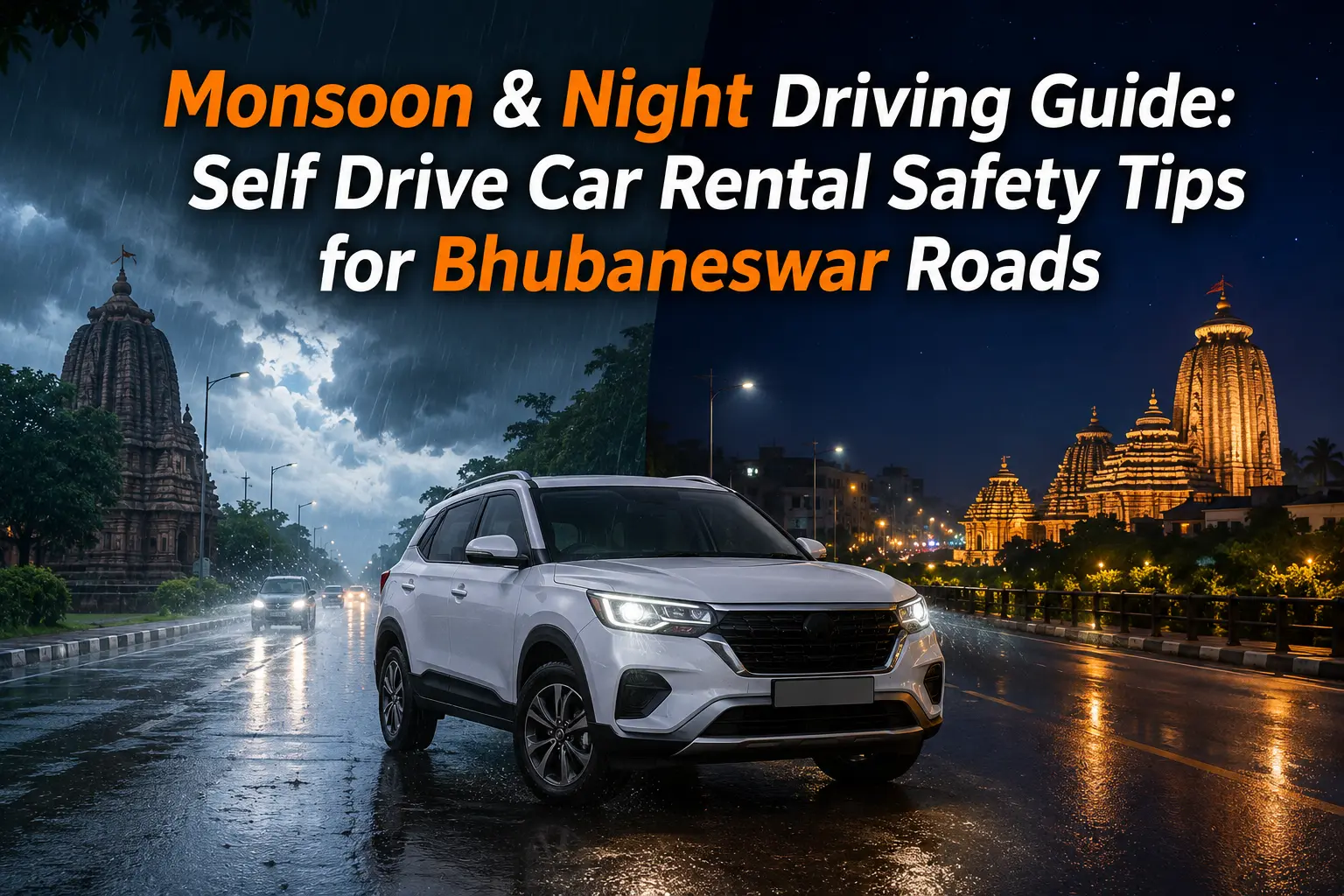
Driving in Bhubaneswar during heavy monsoon showers or navigating national highways at night
requires specialized driving habits. Between heavy rain downpours along the Patia–Infocity stretch, localized
waterlogging around low-lying underpasses, and reduced visibility on the NH-16 highway towards Puri or Cuttack,
safety preparedness is paramount when opting for a self-drive car rental in Bhubaneswar.
Whether you are an IT professional making late-night office returns from DLF Cybercity or a
student group planning an early morning monsoon drive to Puri Marine Drive, these expert recommendations will
ensure a secure and comfortable trip.
1. Navigating Monsoon Waterlogging & Heavy Rain safely
Monsoon weather in Odisha can turn dry city avenues into slow-moving water channels within
minutes. Here is how to handle waterlogged urban stretches:
-
Know Key Vulnerable Zones: Stretches near Vani
Vihar underpass, Acharya Vihar junction, and parts of Jayadev Vihar often experience temporary water
accumulation. Plan alternative routes via major elevated flyovers when heavy rainfall strikes.
-
Drive in Lower Gears: When entering standing
water, shift to 1st or 2nd gear and maintain steady engine acceleration. Avoid braking or shifting gears
mid-water to keep exhaust backpressure high and prevent water ingress into the tailpipe.
-
Prevent Hydroplaning: Heavy rain creates thin
water films on asphalt. Reduce driving speeds by 20–30 km/h, avoid sudden steering jerks, and maintain double
the standard braking distance from the car ahead.
-
Proper Light Usage: Turn on low-beam
headlights and front/rear fog lights. Avoid switching on emergency hazard indicators while driving in rain, as
hazard lights obscure turn indicators from drivers behind you.
2. Night Driving Protocols for Highway & City Commutes
Late-night driving across Bhubaneswar or along four-lane expressways requires extra vigilance
due to unlit stretches and heavy commercial truck traffic:
All-Weather Maintenance Guarantee: Every vehicle in the Kalinga Ride
fleet undergoes routine safety checks covering wiper blade quality, brake pad wear, headlight leveling, and
tire tread depth—ensuring complete reliability during night drives and torrential monsoon rains.
-
High-Beam Etiquette: Dip your headlights to
low-beam when approaching oncoming vehicles, especially on single-lane roads or undivided bypasses around
Khordha and Cuttack.
-
Clean Interior Glass & Mirrors: Wipe down
inner windshield glass to remove humidity film and oil residue that amplify night glare from oncoming high
beams.
-
Watch for Speed Calibrations: Keep within
posted urban speed limits (40–50 km/h) on well-lit corridors like Infocity Avenue and Nandan Kanan Road to
avoid automated e-challans.
3. Choosing the Right Vehicle for Monsoon Travel
Selecting an appropriate vehicle category significantly enhances safety during rainy months:
-
Compact SUVs (Brezza, Nexon, Venue): High
ground clearance (190 mm+) offers superior protection against localized urban waterlogging.
-
Full SUVs (Creta, Thar, Scorpio-N): Sturdy
suspension, wide tire profiles, and commanding road visibility make these ideal for long highway drives to Puri
or Daringbadi during wet weather.
-
Budget Hatchbacks (Swift, Baleno, i20):
Excellent for nimble city errands when booking a car rental in Bhubaneswar, provided you stick to main flyovers and well-drained arterial roads.
Tags
- Monsoon Driving
- Night Driving Safety
- Bhubaneswar Roads
- Puri Highway
- Kalinga Ride
Related Posts
Local Guide
Kalinga Ride Team
April 12, 2026
Rental Tips
Kalinga Ride Team
March 28, 2026





 +91 7752046356
